Battery Rail Transfer Carts
The Battery-Powered Rail Transport Vehicle (KPX) is powered by lead-acid batteries or lithium batteries. The vehicle can move flexibly on the track and can move forward and backward via remote c...
READ MORE
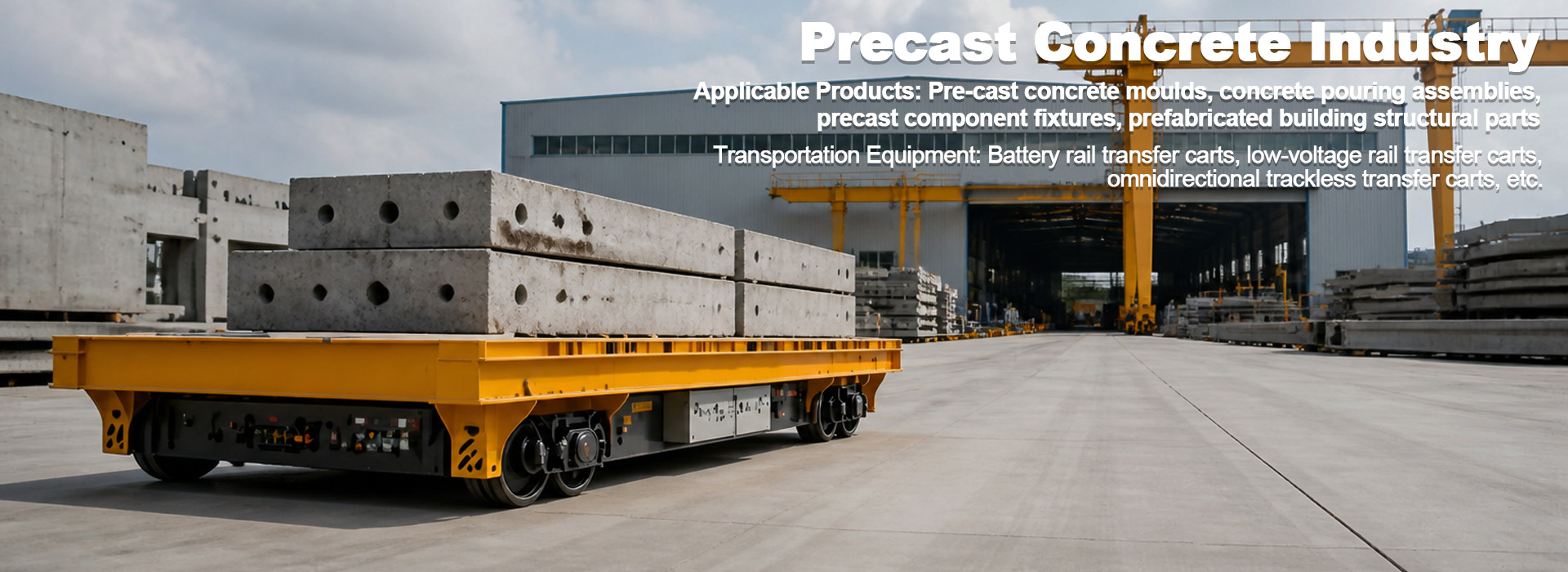
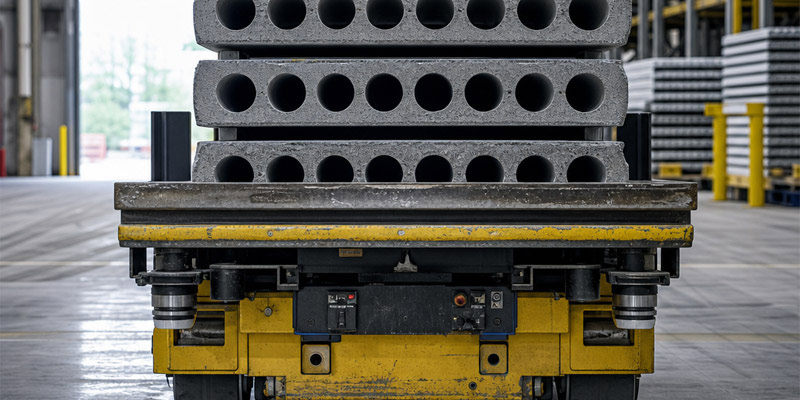
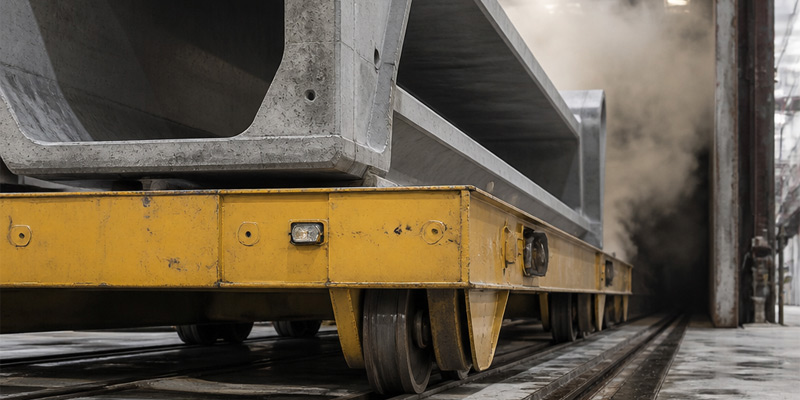
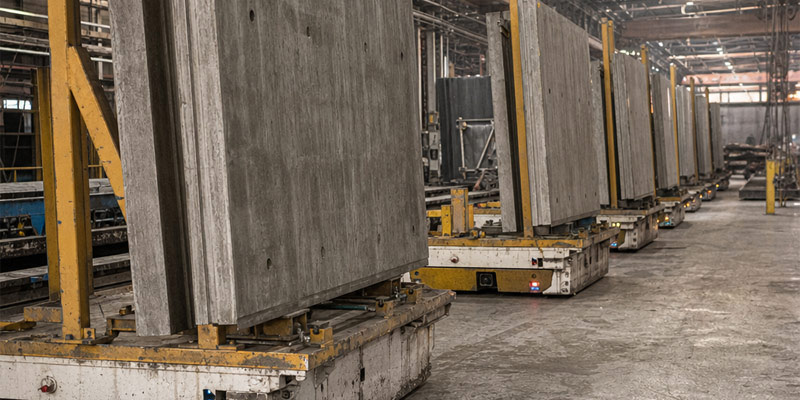
Henan Universal Industrial Equipment Co.,Ltd. provides complete material handling solutions for the precast concrete industry. Our transfer vehicles are engineered for precise handling of pre cast concrete moulds, concrete pouring assemblies, precast component fixtures, prefabricated building structural parts and other heavy precast components. Suitable for assembly line operations, component transfer, equipment assembly and maintenance. Our solutions guarantee safe and efficient operation throughout production, transportation and installation, greatly improving overall working efficiency and operational safety.
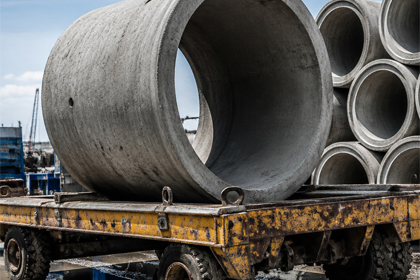
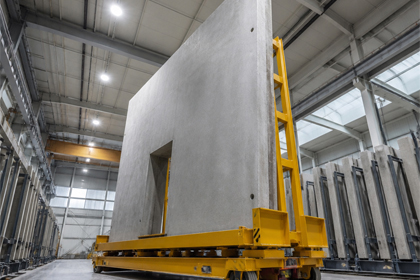
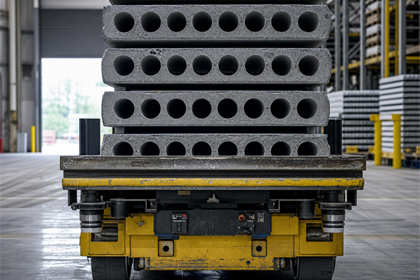
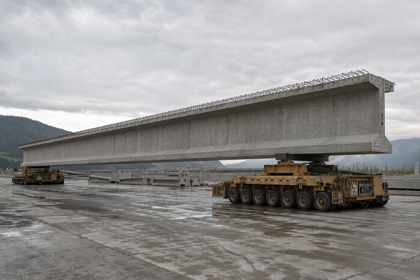
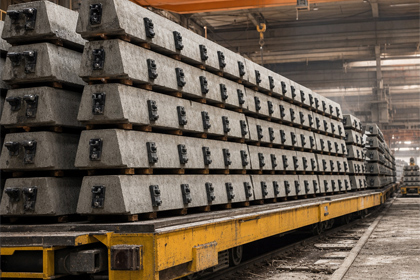
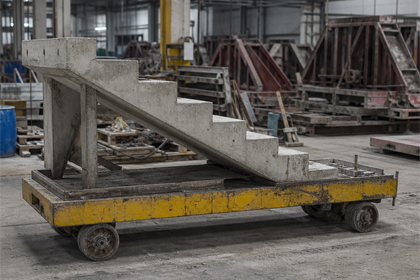
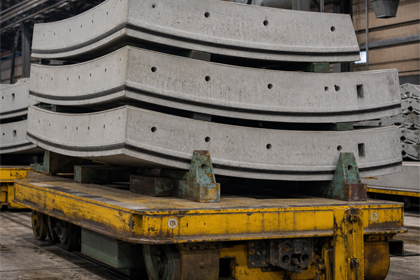
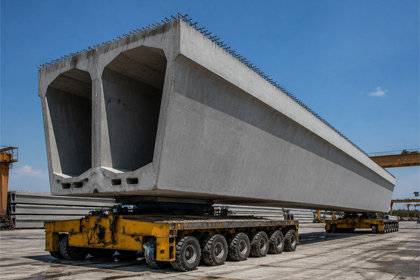
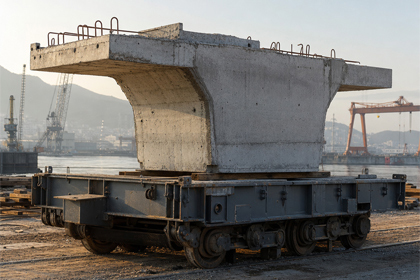
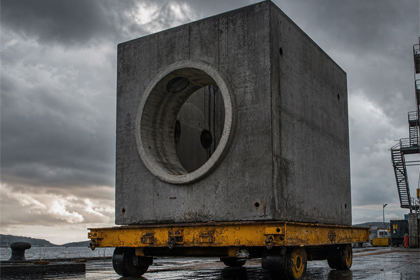
A ground based control unit manages power supply for the transfer cart. On board battery packs feed the cart’s drive and control system. Battery sizing, charging layout, heavy load capacity, insulation monitoring and safety protection are engineered for heavy machinery workshop layouts and tough duty cycles.
| Stage | Engineering function |
| Ground power management | Configure battery capacity and charging setup for precast yard site range, heavy load and shift work demands. |
| On board power transmission | Integrate power output, insulation and dust resistant protection for harsh precast production yard environments. |
| On board drive and control | Provide accurate movement, positioning & smooth braking; no trailing cables, short charging downtime. |
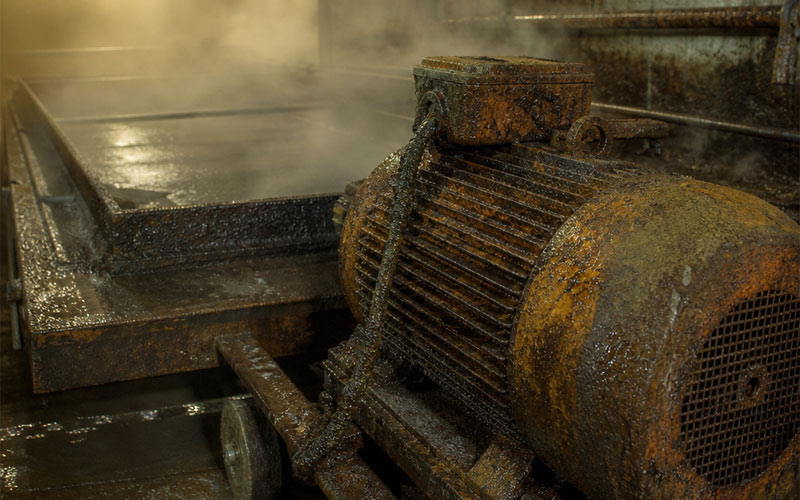
Environmental Degradation
Extreme heat and humidity in curing kilns cause frequent electrical failures and corrosion.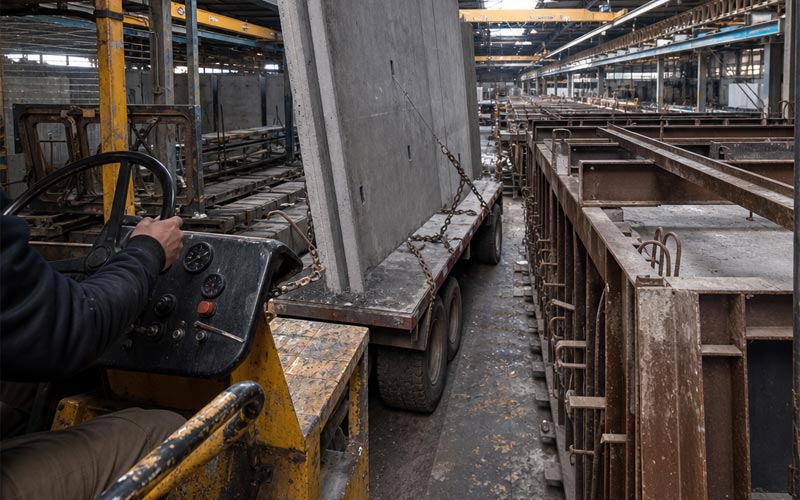
Spatial Limitations
Conventional vehicles with large turning radii are unable to navigate narrow aisles and cluttered layouts.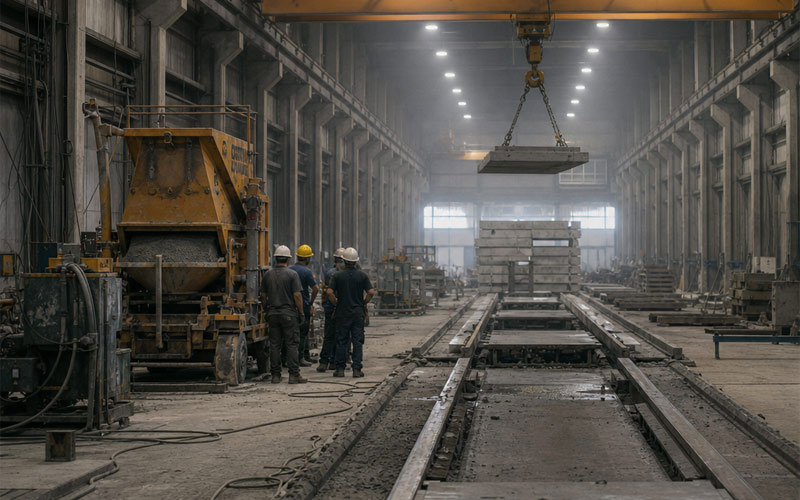
Production Bottlenecks
Over-reliance on overhead cranes creates logistics congestion and significantly slows production cycles.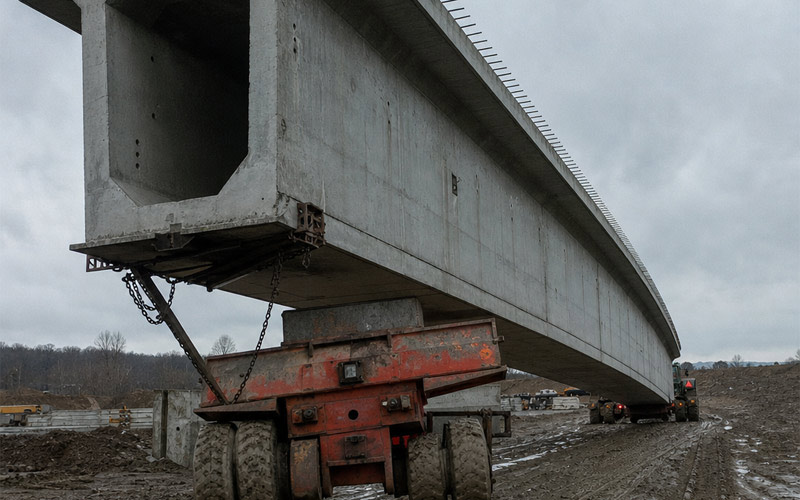
Stability Hazards
Transporting extra-long beams with traditional methods is prone to tipping due to an unstable center of gravity.| Item | Engineering scope |
| Rated load | 20-500ton |
| Power supply | 36V low-voltage rail power |
| Route | Fixed point-to-point route; curves or loops can be engineered when required |
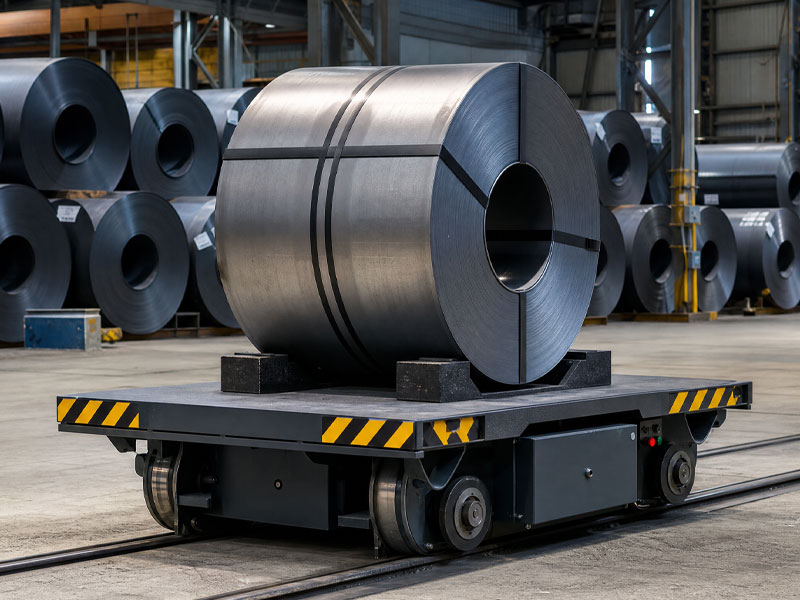
| Load support | V-shaped or saddle cradle around coil diameter, width and axis direction |
| Operation | Manual pendant, wireless remote or integrated control according to the project |
| Safety functions | Controlled acceleration and braking, warnings, emergency stops and optional obstacle detection or interlocks |
The Battery-Powered Rail Transport Vehicle (KPX) is powered by lead-acid batteries or lithium batteries. The vehicle can move flexibly on the track and can move forward and backward via remote c...
READ MORE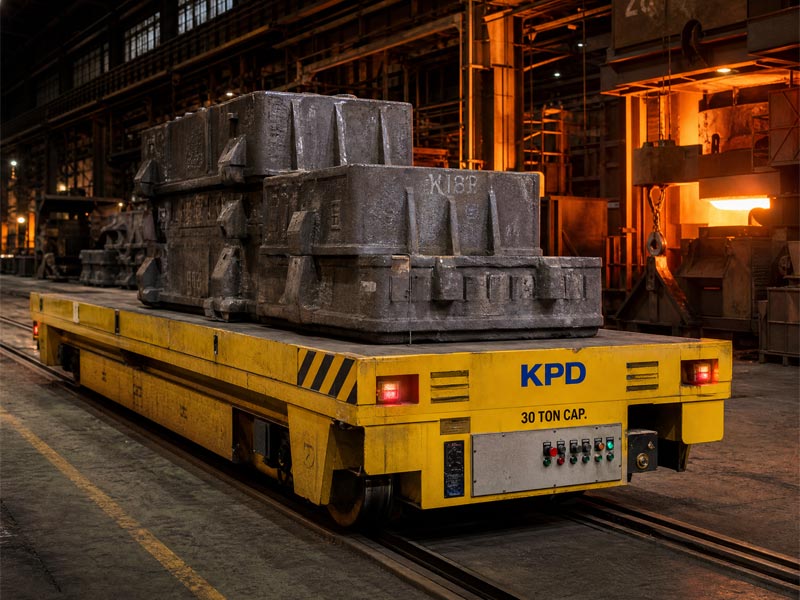
The low-voltage railcar (KPD) uses rail power to power its operation. The workshop’s AC power voltage is stepped down to 36V via a transformer and connected to the insulated rails via wires, ene...
READ MORE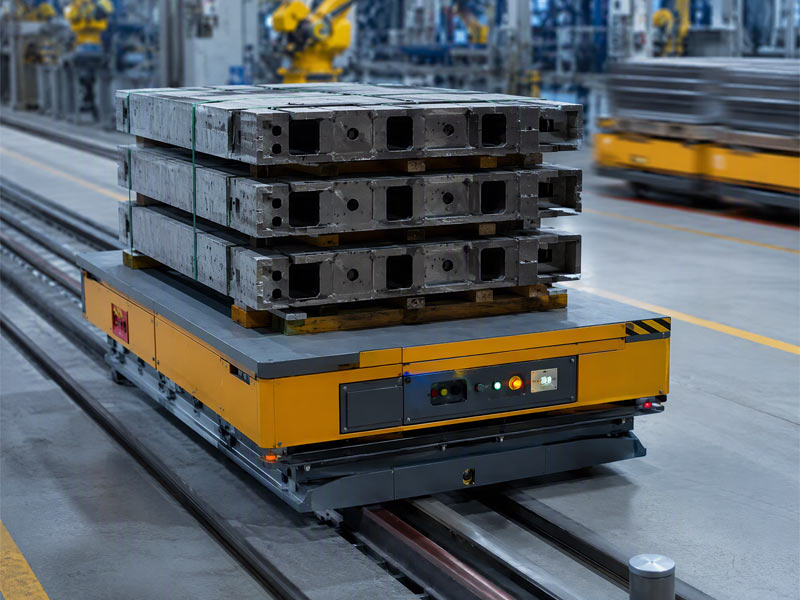
The sliding contact line powered rail transfer cart directly supplies AC power safety contact line power to the transfer cart’s AC control system for starting, stopping, forward movement, and re...
READ MORE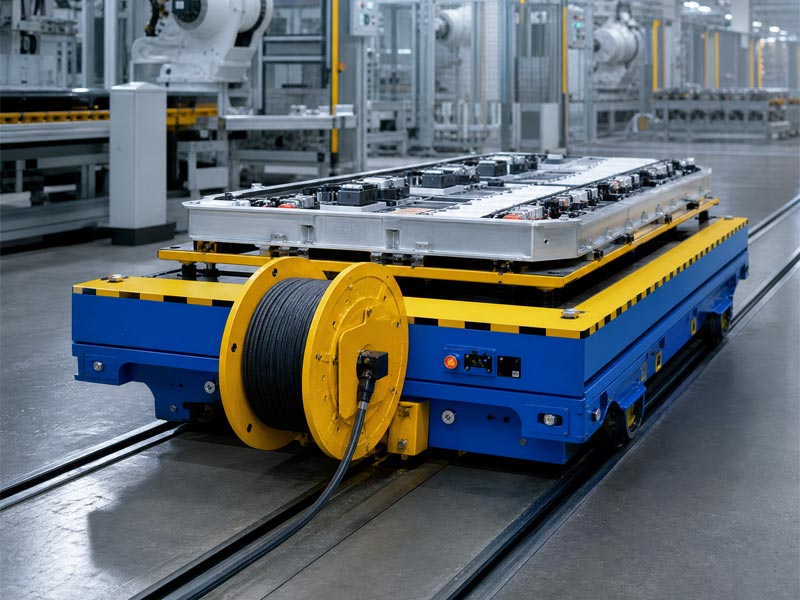
The cable-powered railcar (KPJ) is directly powered by AC electricity power source. An AC motor drives the trolley, which is controlled forward and backward via remote control. Different cable r...
READ MOREAnswer: Yes, where the comparable process takes about 20 minutes because of crane waiting and multiple handovers, a direct route can bring the cycle below 10 minutes. The final result is calculated from the actual route and stations.
Answer: The cart eliminates suspended-oad sway and overhead drop exposure during horizontal travel. Traffic separation,emergency stops, warnings, maintenance and procedures remain essential
Answer: Loading impact depends on contact speed, placement method, contact area, load distribution and structural response. It is checked separately with the frame, wheels. rails and foundation.
Send the following information so the cart, cradle, power, route and protection concept can be engineered around yourprocess.
Copyright © 2026 Design by Henan Universal Industrial Equipment Co.,Ltd. All rights reserved.